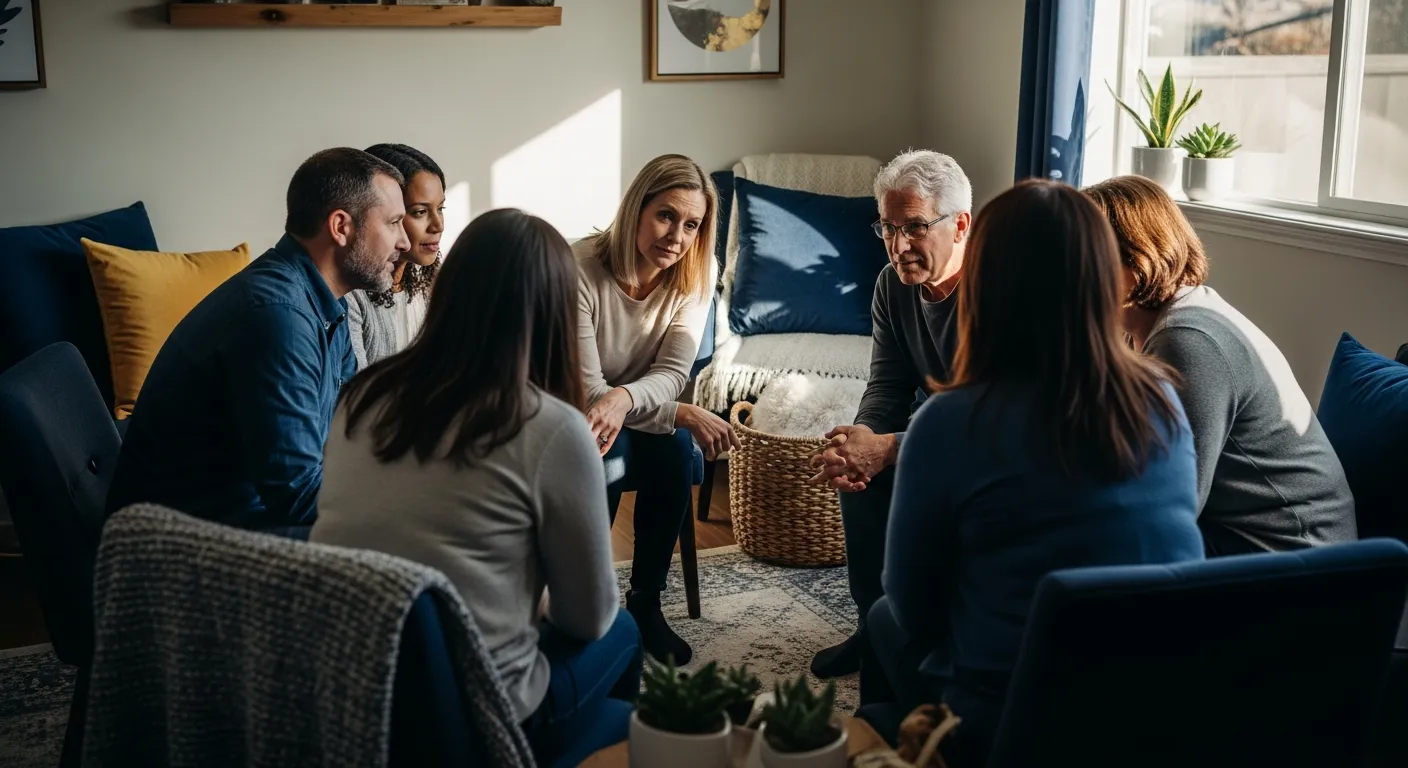
A stable place to land so hard-won progress holds
Completing detox or residential treatment is an important milestone, but the next steps still need a plan. Some people continue with partial hospitalization (PHP), intensive outpatient (IOP), or outpatient (OP) care while rebuilding routines in a stable living environment. The housing choice can support that transition without becoming treatment itself.
Structured sober living can provide a substance-free home, peer support, and accountability while independence grows. It is an option, not a requirement: someone with an appropriate, supportive independent home may continue outpatient care from there instead. Housing and clinical treatment can work together while remaining distinct.
Related pages
What Is Structured Sober Living?
Sober living is the bridge between treatment and the rest of life. Here is what structured sober living actually is, who it helps, and how it protects early recovery.
Learn more
Sober Living for Men
By the Sea Recovery, operated by Present Moments Recovery Group, provides separate men-only Structured Sober Living in San Marcos. Learn what life there looks like and how it supports recovery.
Learn more
How Long Should You Stay in Sober Living?
There is no single right answer, but longer often helps. Here is how to think about length of stay in sober living and what the research suggests.
Learn more
Residential Treatment (RTC)
Round-the-clock residential care in a small, single-family home, typically fewer than six clients.
Learn moreOur Continuum of Care
Compare treatment levels and see how support can change as needs change.
Learn moreWhy the transition is so fragile
Early recovery is a period of rapid change. New routines are still forming, relationships are still being repaired, and the coping skills learned in treatment have not yet been tested under real pressure. Returning to an unstable environment or familiar triggers can make that transition harder. A supportive home, whether structured sober living or appropriate independent housing, can help while that work continues.
Where housing fits in PMR's continuum of care
PMR's care map includes a housing stage after outpatient care: structured sober living or independent living. In practice, an appropriate housing plan may begin while PHP, IOP, or OP is underway. Detox, residential treatment, and outpatient care are clinical services; housing belongs in the overall pathway but is not another PMR clinical treatment level:
- Medication-Assisted Detox, to stabilize the body safely.
- Residential Treatment, to address the deeper causes of addiction.
- Outpatient Treatment, to continue therapy while living more independently.
- Structured Sober Living or Independent Living, the housing stage that supports continuing care without becoming clinical treatment.
Some people attend PHP, IOP, or OP while living in structured sober housing or an appropriate independent home. By the Sea Recovery, operated by Present Moments Recovery Group, offers optional men-only Structured Sober Living in San Marcos; other suitable housing may also fit. BTS provides housing, not PMR clinical treatment. Visit the By the Sea Recovery sober-living page (opens in a new tab) for details about that option.
“The beauty of our Continuum of Care model is a consistent treatment team from the beginning of the journey until the client is ready to fly solo. Clients are able to establish trust with their primary counselor, while the team supports them from the first day of care through their transition into the next appropriate stage of recovery.”
Worried about what happens after treatment ends?
Call or text PMR at (619) 363-4767 to discuss outpatient treatment and housing within a continuing-care plan. Our phone line is answered seven days a week, from 8:00 AM–9:00 PM PT. Outside those hours, leave a message or send a text and we will respond as soon as possible. If By the Sea Recovery is an option you want to explore, its separate housing line is (760) 216-2077; BTS is not the only housing choice.
Frequently asked questions
Why do people go to sober living after treatment?
Some people choose structured sober living for a stable, substance-free home and accountability while routines take hold. Others may do well in appropriate independent housing. PMR's continuing-care plan considers housing alongside, not as a substitute for, clinical treatment.
Can my loved one keep getting treatment while in sober living?
Yes. Depending on the clinical plan, someone may attend PHP, IOP, or OP while living in structured sober housing or another appropriate home. Outpatient care is clinical treatment; housing supports daily stability but is not treatment itself.
How does sober living connect to the rest of PMR's care?
PMR's care pathway includes a housing stage, structured sober living or independent living, after outpatient care in the care map. The housing plan may overlap with PHP, IOP, or OP, but housing is not another PMR clinical treatment level. By the Sea Recovery offers optional men-only Structured Sober Living in San Marcos; other appropriate housing may also fit. Visit the By the Sea Recovery sober-living page (opens in a new tab) for details about that option.
Why is the move from treatment back to daily life so fragile?
The transition from residential care to everyday routines can bring new demands even if outpatient treatment continues. Returning to an unstable environment or familiar triggers can be difficult. A supportive home, whether structured sober living or appropriate independent housing, can help while new routines and coping skills are tested.
Does going to sober living mean my loved one is starting treatment over?
No. Structured sober living is a housing stage within PMR's broader continuing-care pathway, not a restart or a clinical treatment level. A person may continue PHP, IOP, or OP while living in sober housing. By the Sea Recovery is one optional men's housing provider, not a required next step.