
Trust what you see, even when the pills came from a doctor
Families often ask the same questions: How did this happen? It was prescribed by a doctor. Should we encourage them to keep taking it? Are we helping, or enabling? These are understandable questions, and there is no shame in not knowing the answers. Prescription drug dependence develops quietly, often in people who are still working, parenting, and holding life together on the surface.
Related reading
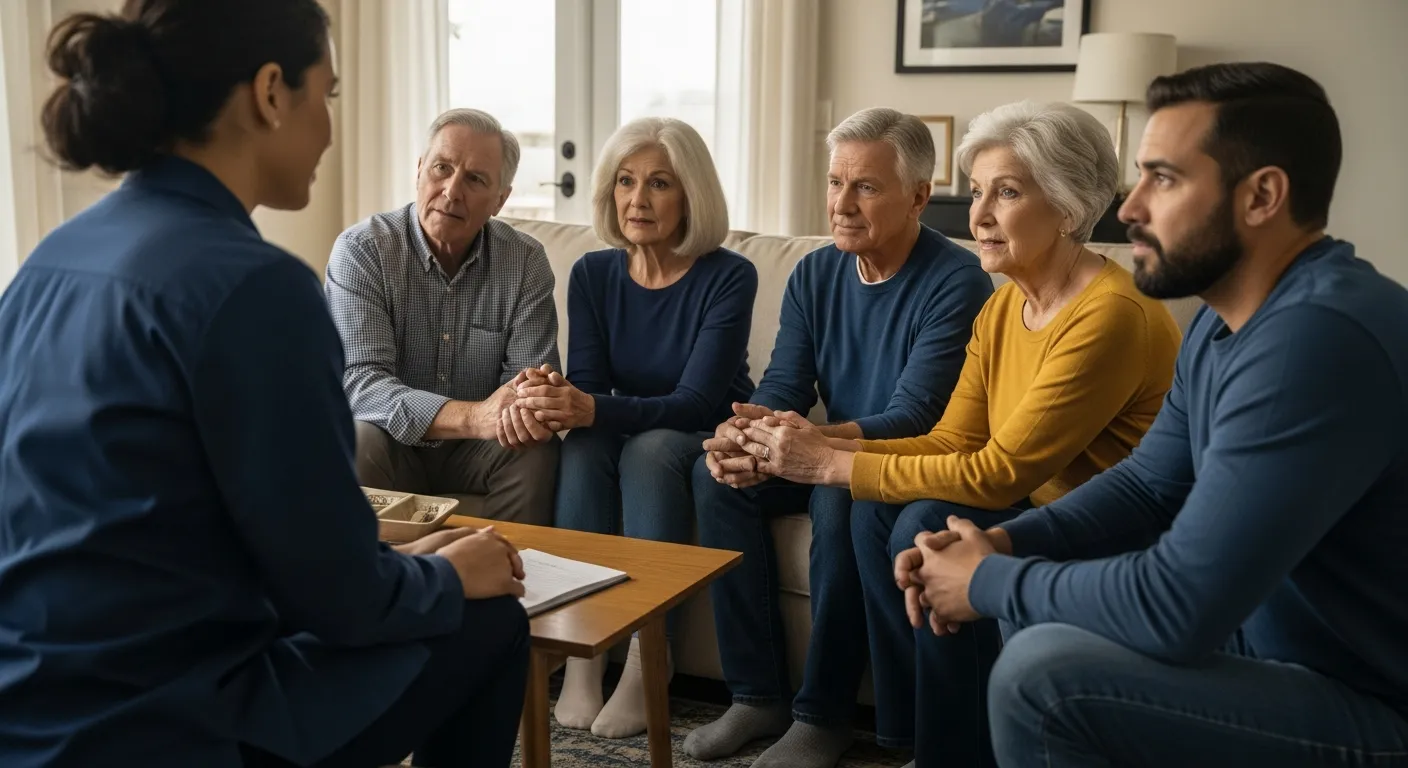

What you might be noticing
- Running out of medication early or urgent concern about refills
- Visits to multiple doctors or pharmacies
- Personality changes: irritability, anxiety, mood swings, or flatness
- Drowsiness, slurred speech, or seeming out of it at odd times
- Defensiveness or secrecy when medication comes up
- Withdrawal from family activities and relationships
- Unexplained financial stress
What helps
Choose a calm, private moment, not mid-argument and not when they are impaired. Speak from care and specifics: "I've noticed you seem anxious when your refill is late, and I'm worried about you," lands very differently than an accusation. Expect defensiveness; guilt runs especially deep with prescription medications because so many people feel they should have been able to control something a doctor gave them. You do not need them to admit to addiction. You only need to keep the door open to a conversation with a professional.
What tends to backfire
- Ultimatums delivered in anger that you are not prepared to keep
- Confiscating or flushing medication without a medical plan, since sudden stopping can be dangerous with some medications
- Shaming language: "junkie", "addict", "weak"
- Covering for missed work or responsibilities, which delays the moment reality can motivate change
- Waiting for rock bottom. With opioids and sedatives especially, waiting carries real medical risk
The difference between helping and enabling
Helping supports the person. Enabling supports the addiction. Paying for treatment is helping. Paying off debts caused by medication misuse, calling in sick for them, or managing their refills so things stay calm is usually enabling, even when it comes from love. Healthy boundaries are not punishment. They are the structure that makes recovery more likely, and we help families learn how to set them without severing the relationship.
You do not have to figure this out alone
When you call Present Moments Recovery, you will often speak directly with Mark Gladden, our founder. You can describe what you are seeing, ask questions, and get an honest read on whether treatment is warranted and what kind. If your loved one is not ready, we can help you think through next steps, including how a professionally guided intervention works. And once treatment begins, families are not left on the sidelines: family therapy, education, and regular communication are part of how we work.
“Our philosophy is that, for some, relapse is part of their recovery journey. This is not a failure or even a choice. When our clients experience a relapse, the greatest compliment to us is that they don't feel ashamed to reach out and come back in, to pick up where they left off, address what worked and what didn't, and develop next steps.”
Start with a conversation
You do not need your loved one's permission to call. Call or text (619) 363-4767 and tell us what you are seeing. No pressure, just a conversation.
Frequently asked questions
How do I know if it's addiction or just dependence on a needed medication?
You often can't tell from the outside, and you don't have to. Dependence means the body has adapted to the medication; addiction involves compulsive use despite consequences. Either way, what you are noticing deserves a professional assessment, and that conversation can start with a phone call.
Should I take their medication away?
Not without a medical plan. Suddenly stopping some medications, especially benzodiazepines and certain sedatives, can be medically dangerous. It also tends to trigger conflict rather than change. A safer path is involving a clinician who can guide a proper taper or detox.
What if they refuse to talk about it?
Stay calm, keep the relationship, and keep the door open. Many people need several conversations before they are ready. You can also call us yourself for guidance, and if things escalate, a professionally guided intervention may help.
Can I call on someone else's behalf?
Yes. Many of our first conversations are with a spouse, parent, or adult child. We will listen to what is happening, answer your questions, and help you understand what options exist, with no obligation.
Will I be involved in their treatment?
If your loved one consents, yes. Family involvement, education, and family therapy are part of how we treat prescription drug addiction, because recovery is stronger when families heal together.