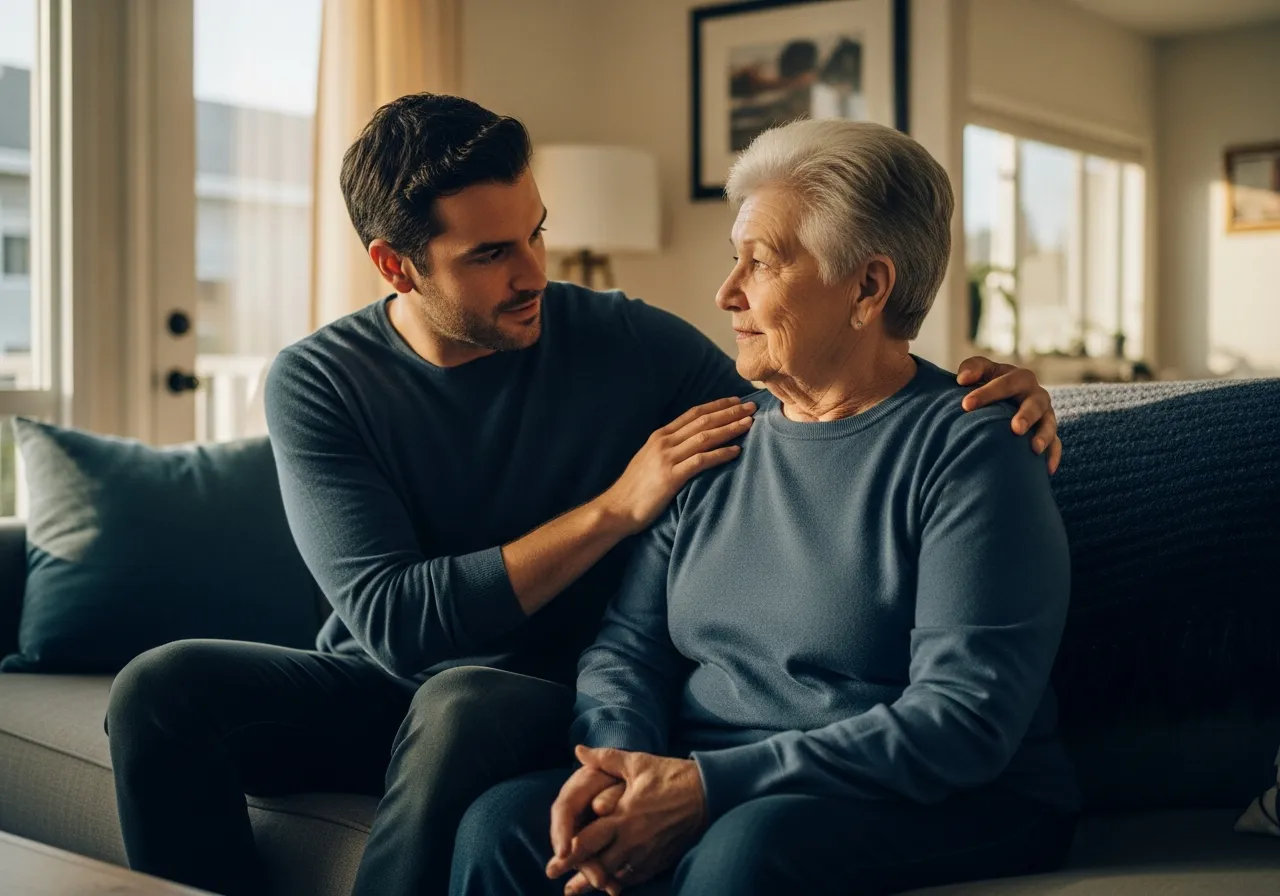
Sobriety is the foundation, not the finish line. The people who stay in recovery aren't the ones with the most willpower, they're the ones who built a life worth being present for.
When someone calls us in crisis, the goals are simple and urgent: stop drinking, stop using, get through the next 24 hours, stop the bleeding. Those goals matter. I've lived them myself, and I'd never minimize how hard it is just to get stable. But after more than a decade of doing this work in North County San Diego, I've learned that those first goals are only the entrance. The real question shows up later, usually once the chaos settles: what am I recovering for?
That question changes everything. Recovery stops being about what you're taking away and starts being about what you're building. And in my experience, the people who stay sober for the long haul aren't the ones with the most willpower. They're the ones who built a life they don't feel the urge to escape from.
Addiction is usually an attempt to leave the present
Nobody develops an addiction because their life feels too meaningful. People reach for escape because something underneath feels unbearable, empty, or disconnected. The substance is the method. Avoidance is the real pattern, and that same pattern can hide inside work, relationships, achievement, or your phone.
The relief is real, for a minute. Then it fades, the underlying pain is still there, and over time the escape adds more suffering than it ever solved. Recovery interrupts that loop, but only if we replace the escape with something, not just remove it.
Why abstinence alone isn't enough
Here's something I tell families all the time: a person can be completely abstinent and still be angry, isolated, anxious, restless, and empty. That doesn't mean recovery is failing. It means the work isn't finished. Without something built in its place, sobriety starts to feel like deprivation, white-knuckling a life you don't actually want. With something built in its place, sobriety becomes freedom.
Meaning is a protective factor, not a luxury
Viktor Frankl, the psychiatrist and Holocaust survivor, observed that human beings can endure almost any hardship when it's connected to a meaningful why. Addiction narrows life down to a single focus. Purpose widens it back out. Recovery is often the process of rediscovering what actually matters to you, your values, your relationships, your contribution, your growth.
Meaning doesn't erase pain. It gives pain a context you can survive inside of.
Recovery is identity work
One of the most overlooked parts of recovery is identity. Addiction has a way of becoming who you think you are, the addict, the failure, the problem, the disappointment. Recovery is the chance to write a different story. The questions stop being 'how do I stop' and start being 'who am I becoming, and what kind of person do I want to be?'
What a life worth living usually includes
Every person's version looks different, but the fulfilling recoveries I've watched tend to share the same ingredients:
- Connection, real relationships and a community you belong to
- Purpose, goals that reach past the next 24 hours
- Growth, the sense you're still becoming someone
- Contribution, helping other people, which quietly heals the helper
- Health, taking care of your body, mind, and spirit
- Authenticity, living in line with your own values instead of performing
Notice none of those are dramatic. They're built through small daily choices, showing up to a meeting, calling your sponsor, exercising, keeping a commitment, sitting down to dinner with people who love you. Individually they look like nothing. Stacked up over months, they become an entirely new life.
The goal of recovery was never perfection. It's participation. Showing up for your own life, on purpose, again and again.
From avoidance to engagement
The deepest shift I see is a change in direction. Addiction runs on avoidance, escaping life, numbing emotions, dodging reality. Recovery runs on engagement, facing emotions, investing in people, and turning toward your life instead of away from it. That's not a switch you flip once. It's a practice you return to. This is also where continuity of care matters so much, because the handoffs between detox, treatment, and real life are exactly where people fall through the cracks. Keeping one team beside you through all of it is the whole reason we built Present Moments the way we did.
Where to go next on our site:
If you're tired of running
Maybe you're sober already and still waiting to feel free. Maybe you're not sober yet and you're exhausted from the chase. Either way, the door's open. Call or text us at (619) 363-4767. You'll get a real person, often me. No pressure, no script, just an honest conversation about what building something new could actually look like for you.